Dear Reader,
Anytime you write about the future, there are signs that you start to notice about your ideas. For longtime readers who remember my annual non-obvious trend reports, I would usually share 15 trends at the close of every December as predictions for the year to come. Then in Future Normal, Henry and I shared 30 trends.
With Future Words, that number has jumped to 100. Each of our words is a sort of micro-trend prediction in its own right ... so it makes sense that we would build our own media radar to seek out examples of each. That inspired the first compilation in this week's newsletter, which is ten trends outlined from the book and illustrated through ten s new stories that emerged this week in the media. In addition to reading those, if you haven't picked up a copy yet - we put together a special link to get it faster (sadly just for US addresses at the moment).
Enjoy all the stories this week, thanks for reading and stay curious!
Rohit
PS - We have over 200 people registered for our upcoming DC Diwali celebration. If you're in the DC area this coming Sunday, come and celebrate with us! RSVP HERE >>
Did you get this email forwarded to you? Subscribe here »
10 Trends From Future Words Shaping Our World In 2027
This week, amongst my usual Non-Obvious stories - I thought I would share ten stories that emerged from this past week alone that illustrate the insights behind our Future Words. Each of these will get you thinking about the future, which should ultimately be the point of any trend predictions. After you read them, let me know which ones stand out for you.
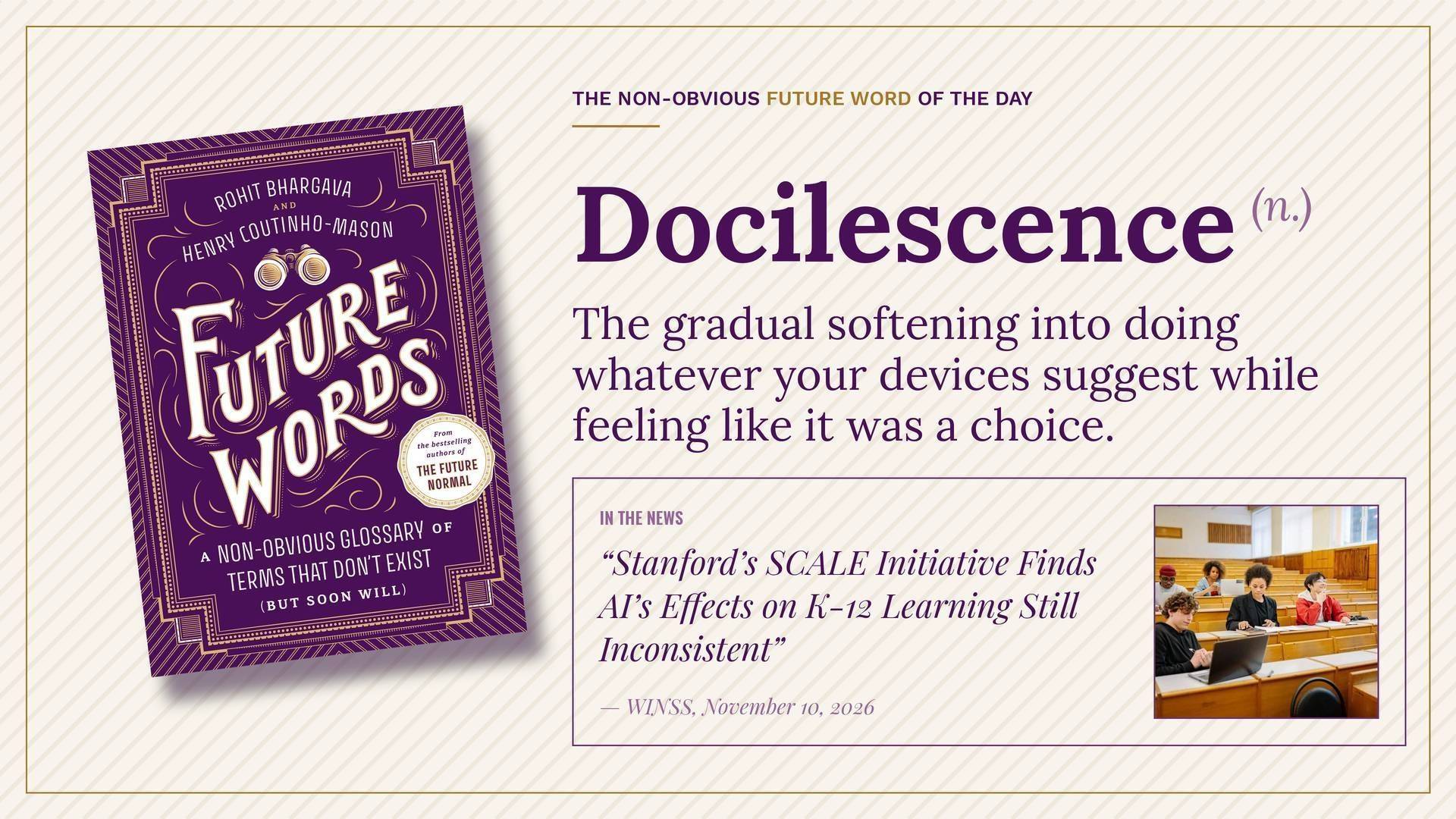
Stanford’s SCALE Initiative survey found that one effect of AI in schools is that it may be "undermining student motivation" which raises the question of how best to allow automation into schools.
|
|
|
|
|
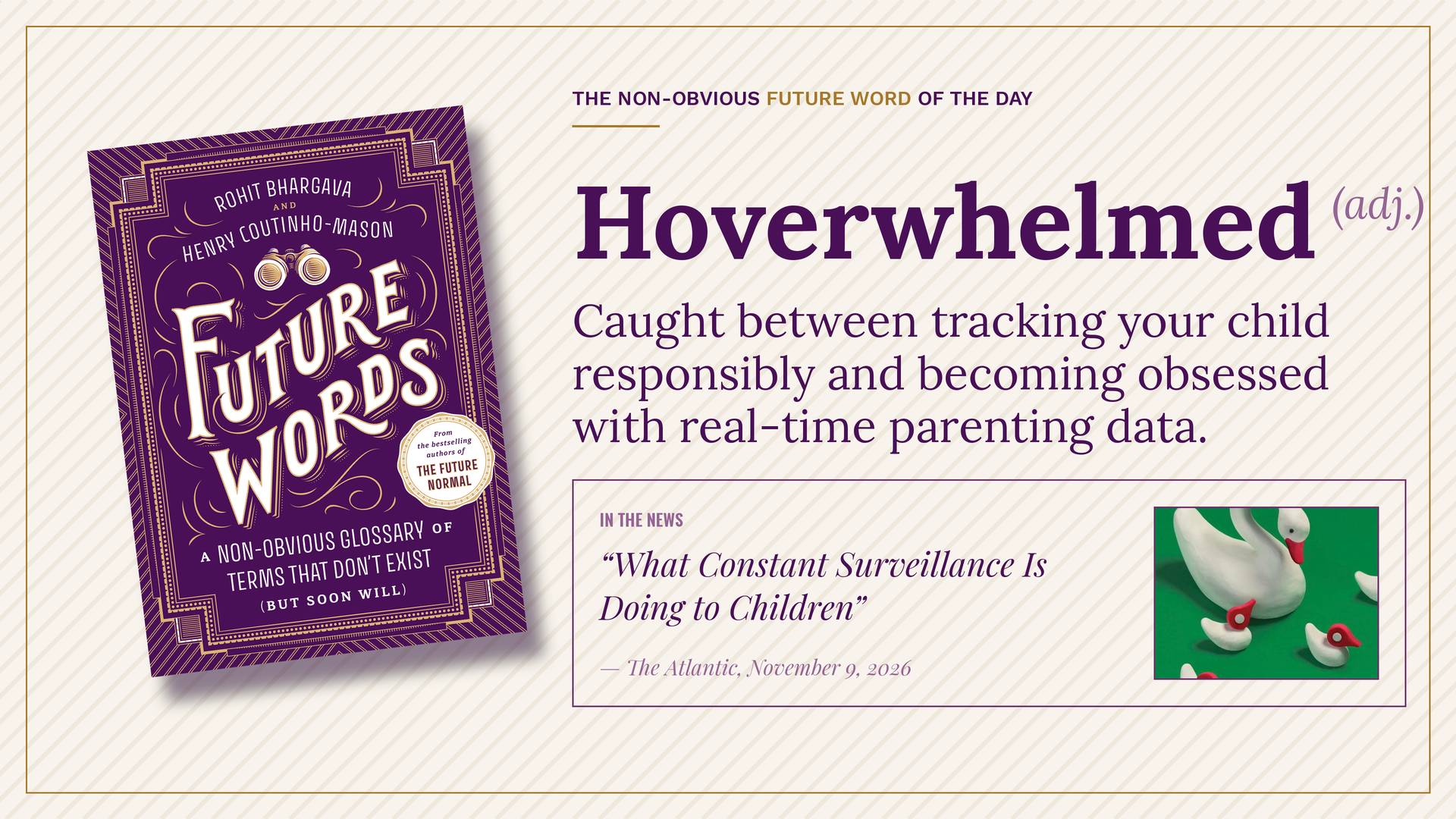
What is constant surveillance doing to children and parents? It's a question The Atlantic asks in a lead article as the ability to track your kids gets so good, it's forcing parents to wonder where they should draw the line.
|
|
|
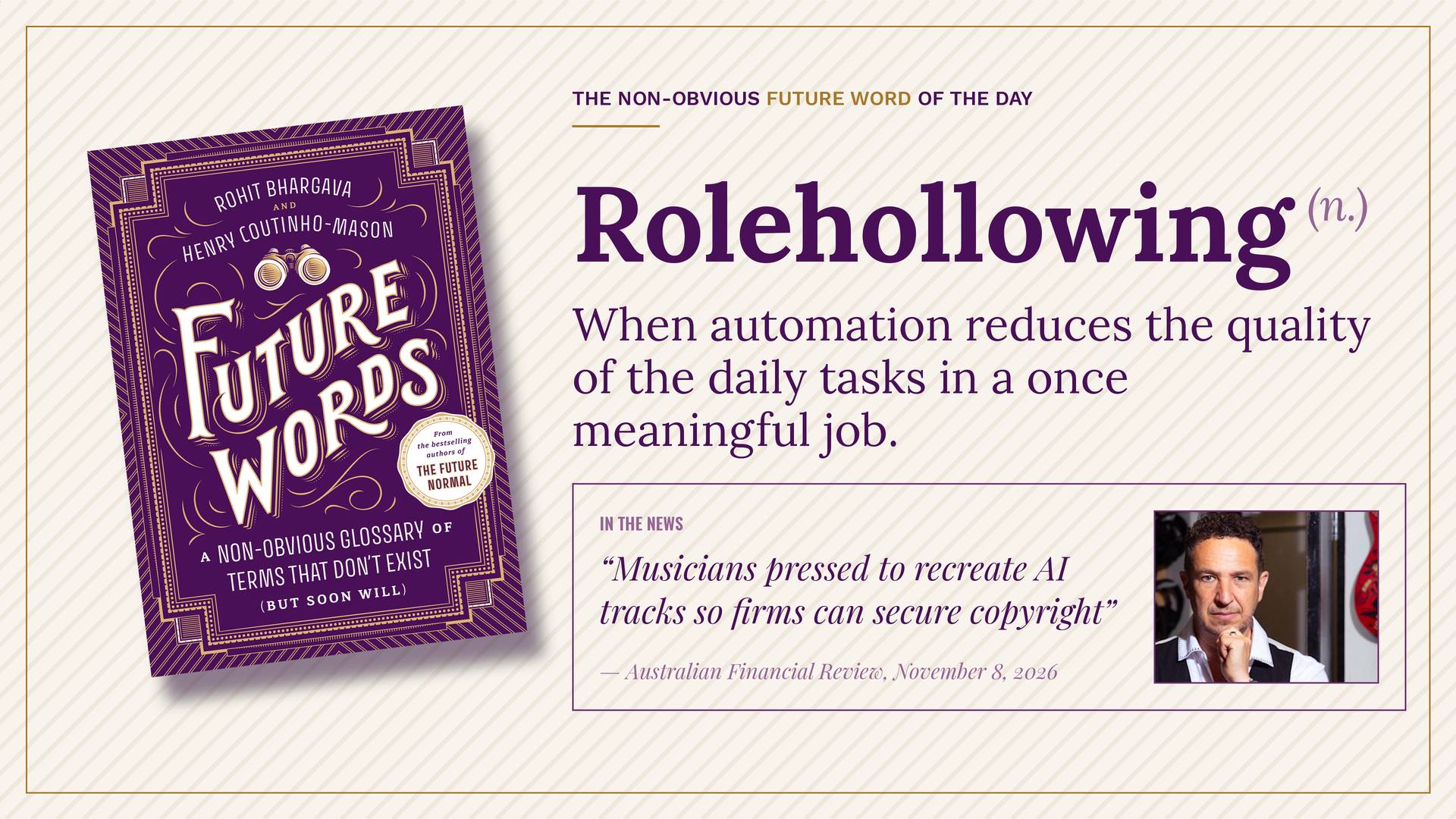
Musicians are being hired to recreate AI tracks so that firms can copyright them and it's a soul draining task for the artists involved. Many are asking if this is the sort of automation we really want.
|
The angorithm (and algorithm that stokes your rage) might explain the mid-term election results. A piece I wrote for the Globe & Mail shares why the rage baiting angorithm works and how we might all fight back.
|
|
What if we have too much access to each other? All the tracking data on our phones may be poisoning our human relationships by making us more demanding and less understanding of normal healthy time apart.
|
When chatbots provide instant answers that are always right, children may stop turning to adults and humans. When kids become accustomed to fake empathy, their capacity to build their own emotional maturity gets compromised.
|
|
|
The Most Predictable Workplace Trend? AI Rebounding
It's a typical story. Leadership at a large organization hears all about the promise of automation and cost saving potential Then they go for it, and implementation turns out to be harder than expected and (surprise!) some humans are just not that easily replaced. So they rehire people - only some of those formerly laid off workers are getting smarter and demanding pay raises.
A recent survey revealed that nearly 19% of workers in the US reported having first hand experience with this. That's a surprisingly high number for something that is a fairly recent occurrence in the workplace. It also feels entirely predictable. Similar to past stories I shared about some retail destinations removing automated checkouts, there is a macro trend here that can be summarized in the idea that organizations seem to be routinely undervaluing the importance of actual skilled and empathetic humans and their abilities to do a job in a way that technology cannot replace.
The Rise of Dopamine Sites
Imagine the thrill of placing an order for something that never comes. Ok, that probably doesn't sound immediately thrilling, but a site called Food Never Comes has amassed nearly 4.5 million orders from people who browsed menu items, chose food, ordered it and then never received anything. This is a "dopamine site, defined as "websites and apps that simulate the full ritual of online shopping or food delivery without taking payment or delivering anything." They are "low-stakes digital experiences for Gen Z consumers coping with rising costs, cravings, and burnout."
The premise is that the act of ordering and the thrill of checking out is more important than getting the product ... and so perhaps offering that dopamine hit could itself be the end of the experience and consumers could save their money and appetite. It's a curious solution to many problems: overeating, overspending, consumerism. The list could go on. More interestingly, it's an entire category that was probably not imagined by anyone forecasting what future buying habits might exist ten years from now. It's a good example of why listening to signals and trends remains so important to understand behavioral shifts.
